
- Posted on
- • Color Psychology
The Power of Black and White in Modern Crafting
- Author
-
-

- User
- C&C Admin
- Posts by this author
- Posts by this author
-
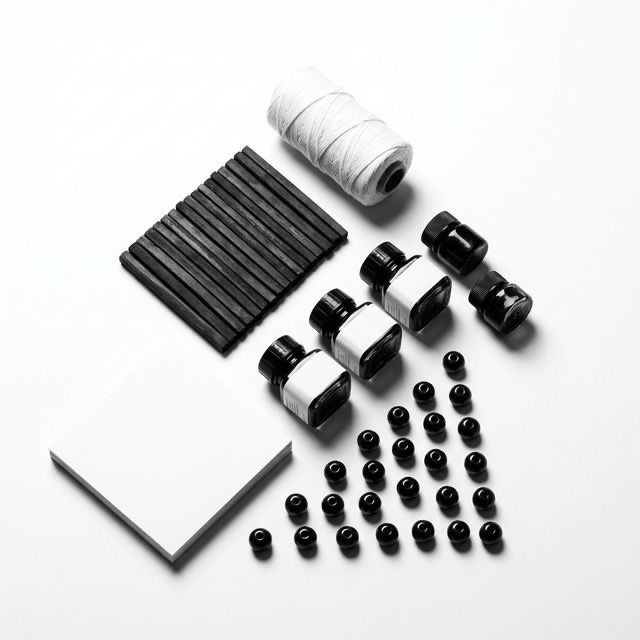
When we talk about "color palettes" in crafting, we usually think of bright blues, warm oranges, or soft pinks. But what happens when you remove hue entirely? What happens when you strip your project down to nothing but pure black and pure white?
Far from being boring or clinical, black and white is arguably the most powerful, dramatic color combination in the world of design. It is the ultimate expression of contrast. By removing the distraction of colorful hues, a black-and-white palette forces the viewer to focus entirely on texture, shape, and composition.
Whether you are designing a modern living room, knitting a graphic sweater, or attempting minimalist painting, mastering black and white will elevate your work to a massive level of sophistication. Let’s explore the striking psychology behind this extreme palette and learn how to use it in your modern crafts.
1. The Science and Psychology of the Extremes
In terms of pure science, black and white are not actually "colors" in the way that red, yellow, and blue are. * White: In the context of light, white is the presence of all colors on the visible spectrum combined. In the context of pigment (like paint), white is the complete absence of color. It reflects all light. * Black: In the context of light, black is the complete absence of light. In the context of pigment, black is the result of all colors mixed together. It absorbs all light.
Because they are absolute opposites in every scientific sense, combining them creates incredible psychological tension.
The Psychology of White
White represents purity, cleanliness, emptiness, and absolute clarity. It acts as visual "breathing room." In modern design, a massive amount of white space (sometimes called negative space) communicates luxury. It says, "I am so confident in my design that I do not need to clutter the page."
The Psychology of Black
Black represents power, mystery, weight, and authority. It is visually incredibly heavy. It naturally grounds whatever it touches, making adjacent colors (even white) look infinitely brighter and sharper by comparison.
2. Why Black and White Works So Well
When you combine the ultimate emptiness of white with the ultimate weight of black, you create a visual dynamic that the human brain intensely loves.
High Contrast equals High Legibility
Our brains are hardwired to look for contrast to understand the shapes and boundaries of the world around us. Because black and white provide 100% contrast, they are the easiest combination for our brains to instantly process. This is why almost every printed book on earth uses black ink on white paper; the extreme contrast makes the shapes of the letters perfectly, effortlessly legible.
Eliminating Emotional Bias
Colors carry massive emotional baggage. Red can make people feel angry, blue can make people feel sad, and yellow can make people feel anxious. By crafting purely in black and white, you completely remove these inherent emotional biases.
The viewer is no longer reacting to a "feeling" associated with a specific color. Instead, their attention is forced onto the actual architecture of your craft: the sharp lines of a geometric quilt, the delicate texture of a woven basket, or the detailed shading in a charcoal drawing. The structure becomes the star.
3. How to Craft with Black and White
Working with such an extreme palette requires a slightly different approach to design. If you use black and white equally without thinking, the project can look like a harsh chessboard.
Here are three rules for keeping your black-and-white crafts modern and elegant.
1. Never Use a 50/50 Split (The Rule of Dominance)
If you paint half of a canvas pure white and the other half pure black, the two halves will violently fight for dominance, causing visual tension. Instead, you must let one color win. Choose one color to be the background (dominating 70-80% of the project) and use the other strictly as an accent. * White Dominant: A room with stark white walls, a white couch, and a single, thick black picture frame on the wall. The frame will draw the eye instantly. * Black Dominant: A dark, moody charcoal sketchbook page with a delicate, intricately drawn white gel pen mandala in the center. The white lines will look as if they are glowing.
2. Rely Heavily on Texture
When you remove color, you must replace the visual interest with texture. Otherwise, the project will look flat and lifeless. If you are knitting a black and white throw blanket, do not just use basic stockinette stitch. Mix a very fluffy, chunky black wool yarn with a smooth, sleek white cotton yarn. Add thick cables or heavy fringes. The physical shadows created by the heavy texture will add a beautiful, subtle grey value to the piece.
3. "Warm" vs. "Cool" Blacks and Whites
Just like colored paint, blacks and whites have subtle undertones. * A "warm white" (like cream or ivory) has a tiny drop of yellow or brown in it. * A "cool white" (like snow or brilliant white) has a tiny drop of blue. * A "warm black" (like sepia or dark umber) has hints of brown or red. * A "cool black" (like Payne's Grey) has strong hints of blue.
If you want a cozy, vintage, slightly softer look, pair an ivory white with a warm, brownish black. If you want a sharp, sleek, ultra-modern look, pair a stark, cool blue-white with a deep, cool blue-black. Mixing warm whites with cool blacks can make the white look dirty or muddy, so try to match their temperatures!
4. When to Add a "Pop" of Color
Once you have established a strong, high-contrast black and white foundation, you have set the perfect stage for a single "pop" of color. Because the black and white act as pure neutrals, any color you introduce will look ten times brighter than it normally would.
- For High Energy: Add a tiny pop of neon pink, fiery orange, or bright yellow. This is a very popular motif in modern pop art and graphic design.
- For Organic Elegance: Add a pop of earthy green (like a live houseplant against a black and white wall, or a single painted olive leaf on a black and white card).
- For Luxury: Add a pop of metallic gold or warm brass. The combination of black, white, and gold is the universal calling card of expensive, high-end design.
Conclusion
Black and white is not a restriction; it is an incredible aesthetic liberation. By stepping away from the color wheel, you free yourself to focus entirely on contrast, shape, and physical texture.
Whether you lean into the clean, airy emptiness of white, or the heavy, dramatic mystery of black, this extreme palette guarantees a sophisticated result. The next time you want to make a bold modern statement, skip the vibrant colors entirely and let the sharpest contrast in the universe do the talking.