
- Posted on
- • Color Psychology
Neutral Colors: The Unsung Heroes of Craft Design
- Author
-
-

- User
- C&C Admin
- Posts by this author
- Posts by this author
-
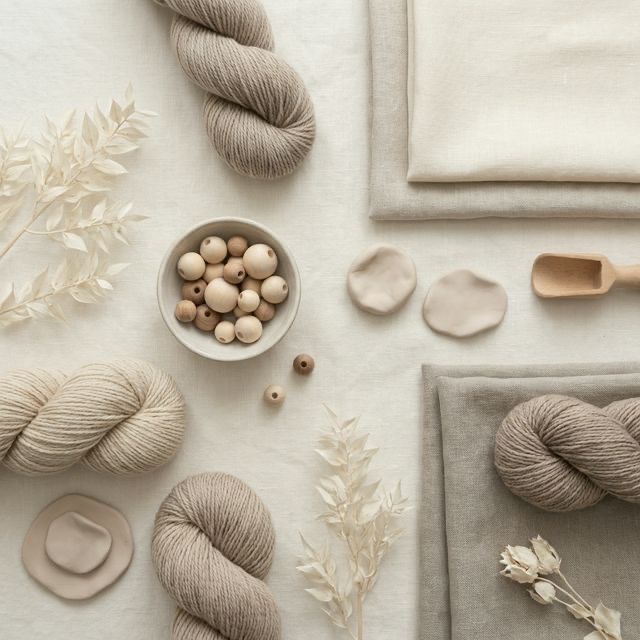
When we talk about color psychology, the conversation is almost always dominated by the brightest hues on the wheel. We talk about the fiery passion of red, the sunny optimism of yellow, and the profound calm of blue.
However, there is an entire category of color that quietly does the heavy lifting in almost every successful craft project, painting, and interior design scheme in the world: the neutrals.
Colors like beige, taupe, cream, grey, and greige may not shout for attention, but they are the essential glue that holds the design universe together. Without them, our colorful projects would be visually exhausting and chaotic. Let’s explore the quiet, grounding psychology of neutral colors, and learn why they are truly the unsung heroes of craft design.
1. What Exactly Is a Neutral Color?
In the strict, scientific sense of color theory, a pure neutral is a color without any hue. This means pure white, pure black, and pure grey.
However, in the practical worlds of crafting, decorating, and painting, the definition of a "neutral" is much broader. Practical neutrals are colors that have been so heavily muted or desaturated that they function as a visual resting place. They do not compete with other colors; instead, they fade into the background.
The most common practical neutrals are: * Browns: From dark espresso down to light tan. * Beiges and Creams: Warm, off-white hues. * Taupes: A complex mixture of brown and grey. * Greys: From light silver down to dark charcoal.
The Psychology of Neutrals
While bright colors stimulate the brain, neutral colors act like a visual deep breath. Because they are not screaming for our attention, looking at them physically lowers our heart rate. * They represent stability, structure, and reliability. * They are incredibly earthy, reminding our brains of natural elements like stone, sand, dry wood, and soil. * Because they lack a distinct "personality," they feel incredibly sophisticated, timeless, and classic. (This is why high-end luxury brands frequently use beige, cream, and grey in their packaging and boutiques!).
2. The Power of "Visual Breathing Room"
The biggest mistake a beginner crafter makes is trying to use too many bold colors at once. If you knit a sweater using bright orange, neon pink, lime green, and electric blue, the final product will look chaotic and visually exhausting. The viewer's eye will bounce rapidly around the sweater, never finding a place to rest.
Neutrals provide that resting place. They act as "visual breathing room."
The 80/20 Rule Revisited
The most effective way to use neutral colors is to make them the dominant force in your project. Professional interior designers often use the 80/20 rule: 80% of the room should be decorated in neutrals (walls, large furniture, rugs), and 20% should be decorated in accent colors (pillows, art, small accessories).
Applying this to crafting: * Scrapbooking: If you have colorful, busy photographs, mount them on soft beige or grey paper rather than bright patterned paper. The neutral background tells the eye exactly where to look (the photos) without fighting for attention. * Macrame and Weaving: A massive wall hanging made entirely of 100% natural, undyed cream cotton cord looks infinitely more expensive and sophisticated than a wall hanging made of six different bright colors.
3. Warm vs. Cool Neutrals
Just because a color is neutral does not mean it lacks temperature. Knowing the difference between a warm neutral and a cool neutral is the secret to a perfectly harmonious craft project.
Warm Neutrals (Beige, Cream, Tan, Brown)
Warm neutrals have subtle undertones of yellow, orange, or red. * The feeling: They feel incredibly cozy, inviting, and organic. They mimic the colors of dry sand, autumn wheat, and warm skin. * When to use them: Use warm neutrals when you want a project to feel comforting and historic. Paired with warm accent colors (like rust red or mustard yellow), they create an incredibly rich, autumnal, boho aesthetic.
Cool Neutrals (Silver, Slate, Charcoal Grey)
Cool neutrals have subtle undertones of blue, green, or purple. * The feeling: They feel incredibly sleek, modern, industrial, and sharp. They mimic the colors of concrete, stormy skies, and steel. * When to use them: Use cool neutrals when you want a project to feel highly polished and contemporary. Paired with cool accent colors (like navy blue or emerald green), they create a very crisp, modern, almost "corporate" elegance.
The Modern Compromise: "Greige"
If you cannot decide between the coziness of beige and the sharp modernism of grey, use "greige." As the name implies, it is a perfect mixture of grey and beige. It is currently the most popular wall color in modern interior design because it offers the absolute best of both worlds: it is warmer than a sterile grey, but more modern than a heavy 1990s beige.
4. Crafting a Monochromatic Neutral Masterpiece
Some of the most beautiful craft projects in the world do not use bright accent colors at all. They rely entirely on a monochromatic neutral palette. However, if you remove bright colors, you must replace them with something else to keep the project interesting.
The secret to a stunning "all-neutral" craft project is extreme texture.
If you pour a perfectly smooth, flat, beige acrylic painting on a smooth, flat canvas, it will likely look incredibly boring. But, if you take that same beige acrylic paint and mix it with heavy texture paste, modeling clay, or sand, suddenly the project comes alive.
The rough textures will cast real, physical shadows across the canvas, creating hundreds of tiny variations of light beige and dark beige. * In Textiles: When knitting an all-cream blanket, use a massively chunky, thick spun wool, and incorporate complex cable stitches. The shadows of the cables will provide all the visual interest you need. * In Jewelry: When making a beige clay necklace, do not make perfectly smooth beads. Leave organic fingerprints in the clay, or roll the wet clay in heavily textured fabric to imprint a pattern.
Conclusion
Neutral colors are the humble, hardworking foundation of all great art. They do not get the glory or the attention of the bright reds and blues, but they are the single easiest way to make your DIY crafts look elegant, grounded, and professionally designed.
The next time you are at the craft store, resist the urge to immediately grab the brightest colors on the shelf. Instead, spend some time exploring the quiet beauty of the tans, taupes, creams, and greys. Build your project on a solid neutral foundation, and your finished craft will never go out of style.