
- Posted on
- • Color Psychology
The Psychology of Red: Adding Energy to Your Crafts
- Author
-
-

- User
- C&C Admin
- Posts by this author
- Posts by this author
-
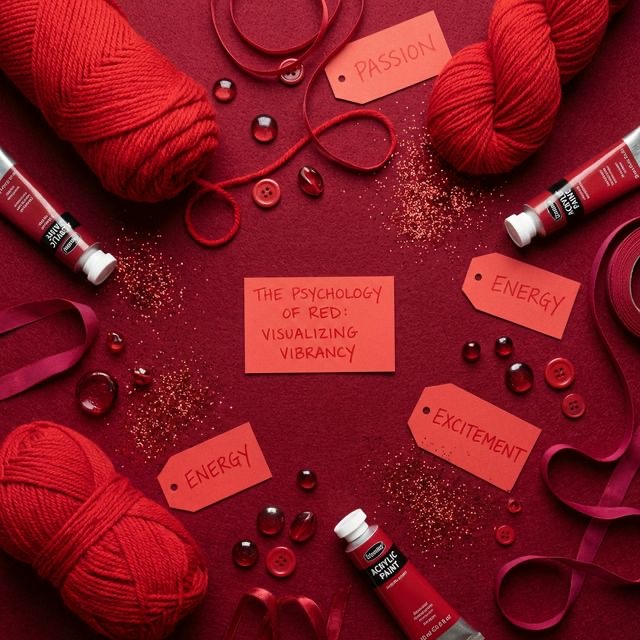
Think about the last time you saw a bright red sports car zoom past you. Or imagine the feeling of walking a red carpet, holding a bouquet of red roses, or seeing a red clearance tag at your favorite craft store.
More than any other color on the spectrum, red demands an immediate physical and emotional reaction. It is loud, it is unavoidable, and it is incredibly powerful. Because of this, red is one of the most exciting (yet dangerous) colors to use in your crafting projects. If you use it perfectly, your project will pulse with life and energy. If you use it recklessly, it can become aggressive and visually exhausting.
Let’s unpack the fascinating psychology behind the color red, and learn how to harness its fiery energy to make your DIY crafts truly unforgettable.
1. The Physical Power of Red
Before we look at the emotional side of red, we have to look at the biology. Color is not just a visual experience; it is a physical one. And no color affects the human body quite like red.
The Biological Reaction
Scientific studies have shown that looking at pure, bright red light can actually trigger a physical response in the human body. Because red is positioned at the very end of the visible light spectrum, it has the longest wavelengths. When these long waves hit our retinas, they stimulate our nervous systems.
Exposure to bright red can: * Raise your heart rate * Increase your blood pressure * Stimulate your adrenaline glands * Make you breathe slightly faster * Increase your appetite (which is why almost every major fast-food chain uses red in their logo!)
When you use red in a painting, a quilt, or a piece of jewelry, you are not just adding pigment. You are injecting a dose of biological energy directly into the viewer.
2. The Duality of Red: Passion vs. Danger
Red is a color of extremes. It does not do "subtle." Because of its intense physical effects, human history and culture have assigned very strong dual meanings to the color red. It represents both the very best and the very worst of human emotions.
The Positive Side: Passion and Love
On the positive side, red is the universal symbol of passion, love, desire, and warmth. * It is the color of Valentine's Day hearts and romantic roses. * It is the traditional color of bridal dresses in many Eastern cultures, symbolizing luck, joy, and prosperity. * It feels cozy and warm, bringing to mind crackling fireplaces and heavy winter blankets.
The Negative Side: Danger and Anger
On the negative side, red is the universal symbol of danger, aggression, and warning. * It is the color of stop signs, fire alarms, and emergency sirens. * It is associated with anger (e.g., "seeing red"). * In the natural world, brightly colored red insects and frogs are often poisonous, warning predators to stay away.
Walking the Tightrope
As a crafter, you are constantly walking this tightrope when you use red. If you are painting a picture of an exploding volcano, the aggressive, dangerous side of red works perfectly. But if you are knitting a baby blanket, pure fire-engine red might be entirely too aggressive and stimulating for a nursery.
3. The Temperature of Red
While red is generally considered the ultimate "warm" color, not all reds are created equal. The temperature of your red completely changes its psychological impact.
Warm Reds (Tomato, Scarlet, Vermillion)
A warm red has a tiny amount of yellow mixed into it. Think of the color of a ripe tomato or a classic fire engine. * The feeling: These reds are incredibly loud, cheerful, and energetic. They are inherently playful and less serious. * Crafting tip: Use warm reds for highly energetic projects, like children's toys, cheerful summer party decorations, or bold pop-art paintings.
Cool Reds (Crimson, Cherry, Burgundy)
A cool red has a tiny amount of blue mixed into it. Think of the color of a dark cherry or a glass of red wine. * The feeling: These reds are much more serious, sophisticated, elegant, and moody. They lose the playful "fast-food" energy and replace it with a sense of regal luxury. * Crafting tip: Use cool reds when you want your project to look expensive or formal. A deep burgundy velvet pillow looks incredibly luxurious, whereas a warm tomato-red velvet pillow might look like a prop from a circus.
4. How to Use Red in Your Crafts
Because red is so commanding, here are three professional rules for incorporating it into your DIY projects without overwhelming your audience.
1. The Red Accent (The 10% Rule)
If you are afraid of red overpowering your project, use it strictly as an accent color. Because red naturally advances (pulls forward to the eye), it takes very little red to make a massive impact. If you are designing a scrapbook page with mostly black, white, and grey photos, a single, tiny red paper heart in the corner will command the attention of the entire page. Let neutral colors do 90% of the work, and let red do the final 10% of the heavy lifting.
2. Taming Red with Earth Tones
If you want to use a lot of red, the best way to keep it from giving your audience a headache is to surround it with calming, natural earth tones. Instead of pairing bright red with stark black or pure white (which creates jarring, aggressive contrast), pair a slightly muted red (like a rusty brick red) with warm creams, soft sage greens, and natural wood tones. This grounds the red, keeping all of its warmth and passion while completely removing its aggressive edge.
3. Playing with Value (Tints and Shades)
If pure red is too loud, shift its value! * Shift to a Tint: If you add white to red, you get pink. Pink retains the loving, passionate roots of red, but completely removes the aggression. It becomes sweet, romantic, and youthful. * Shift to a Shade: If you add black to red, you get maroon. Maroon retains the power of red, but removes the playful urgency. It becomes grounded, historic, and incredibly sophisticated.
Conclusion
Red is the ultimate show-stopper. It is the color of life, fire, and unbridled emotion. While it can be intimidating to work with, it is an essential tool in any crafter's arsenal.
By understanding the difference between warm and cool reds, relying on the power of the red accent, and knowing when to soften the color into pinks or maroons, you can easily control this fiery hue. Don't be afraid to be bold. The next time your project feels a little bit boring, just reach for the red and watch it come alive!