
Color & Crafts

Paint Mixing

The Perfect Shade

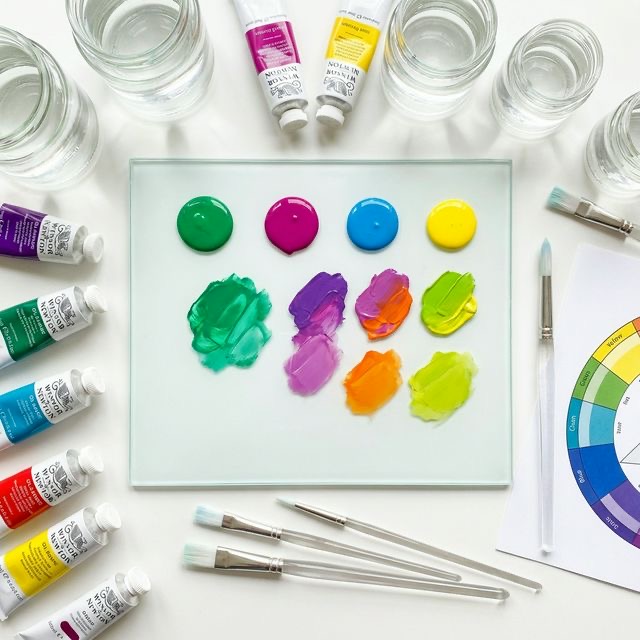
Mixing color is a science and an art. In this section, we move beyond the tube to teach you how to mix custom hues, avoid "muddy" colors, and match any shade you see in the real world.

  • Posted on
    How to Mix Vibrant Colors Without Getting 'Mud'

    Every beginner painter has experienced this exact heartbreak: You squeeze out a beautiful puddle of bright blue paint, and right next to it, a beautiful puddle of bright yellow. You mix them together, expecting to see a brilliant, glowing emerald green. Instead, you get a flat, dull, murky olive sludge.

    In the art world, we call this sludge "mud." It is the most common frustration for beginner painters and crafters.

    So, what went wrong? Why didn't your blue and yellow make a bright green? The answer lies in a hidden scientific rule called "Color Bias." Once you understand how color bias works, you will completely eliminate mud from your palette, unlocking the ability to mix incredibly bright, vibrant, jewel-toned colors every single time.
  • Posted on
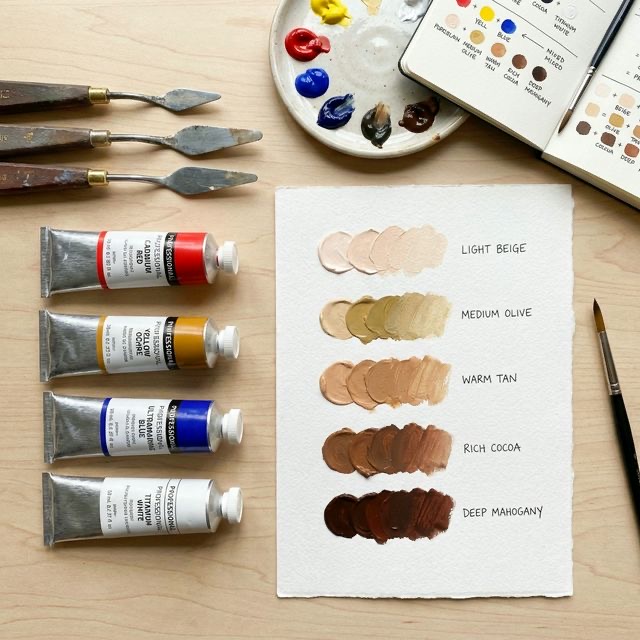
    Creating Skin Tones: A Color Mixing Guide

    Painting a realistic human portrait is often considered the ultimate test of an artist's ability. Beyond capturing the correct proportions of the face, the hardest part of portraiture is undeniably mixing the perfect skin tone.

    Many beginners try to take shortcuts by mixing white paint with orange, or worse, buying a tube of pre-mixed "flesh tint." These shortcuts almost always result in portraits that look chalky, plastic, or completely lifeless.

    The truth is, human skin is incredibly complex. It is translucent, entirely unique to the individual, and constantly reflecting the colors around it. However, the foundational rules for mixing realistic skin tones are surprisingly simple. Regardless of whether you are painting deep mahogany or pale ivory, the formula is exactly the same. Let’s dive into the ultimate color mixing guide for creating realistic, beautiful skin tones.

  • Posted on
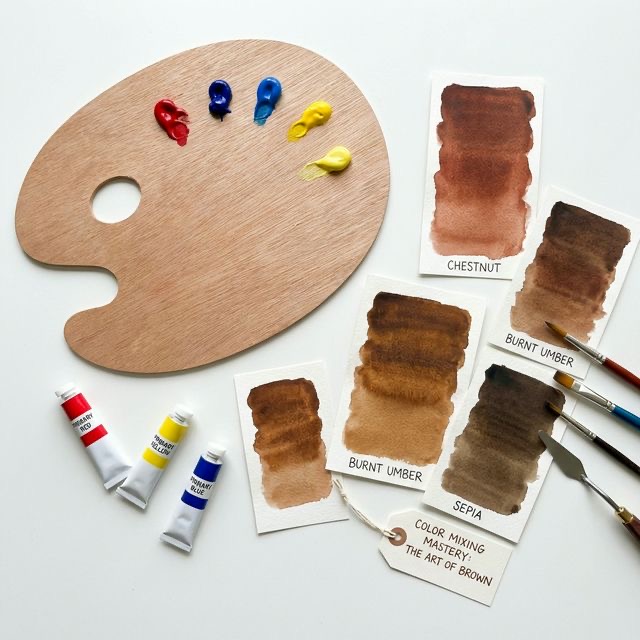
    How to Mix the Perfect Brown Every Time

    If you walk into any craft or art supply store, you will see dozens of tubes with names like "Burnt Umber," "Raw Sienna," and "Van Dyke Brown." While it is incredibly convenient to buy these pre-mixed paints, relying on them completely is one of the biggest mistakes a beginner artist can make.

    When you buy a tube of brown paint, you are stuck with that exact shade. But if you learn how to mix your own browns from scratch, you unlock the ability to create thousands of highly nuanced, perfectly matched earth tones.

    Mixing brown is often a source of frustration for beginners, usually resulting in a muddy, lifeless grey sludge. But there is a very simple, scientific formula behind it. Today, we are going to demystify the color wheel and learn the foolproof method for mixing the perfect brown every single time.